Inspired by my previous post, my friend and I discussed what makes an author successful. We agreed that certain themes are more popular, potentially leading to greater recognition. Yet, many renowned authors have created what’s considered “serious literature,” encompassing works exploring profound themes and often exhibiting a unique writing style. We also agreed that Nobel laureates are generally perceived as better writers.
This conversation sparked my curiosity about Nobel laureates in literature which can be argued a mark of success in the field. I wanted to explore their age at the time of receiving the prize, a key topic of our discussion. Additionally, I wanted to understand their geographical origins and identify the countries with the most laureates.
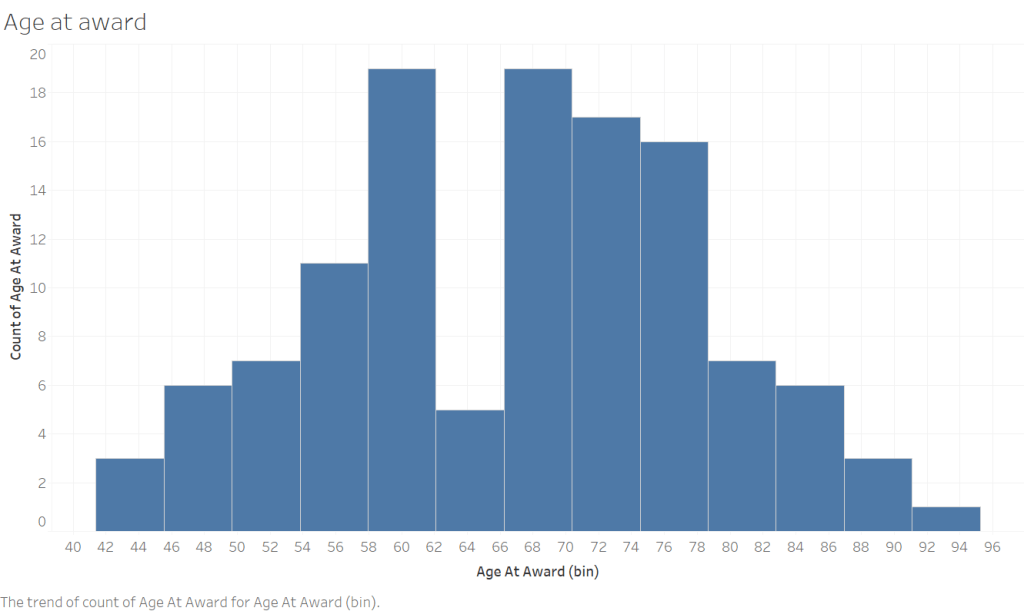
To gain insights, I analysed a Kaggle dataset using SQLite and Tableau. A histogram revealed most Nobel laureates receive the prize between 66 and 70, reflecting the expectation of a substantial career. However, Rudyard Kipling was the youngest at 42 in 1907. Perhaps the prize’s early years prioritised talent over experience. The data also revealed a preference for poetry, prompting a keyword analysis of various literary forms. Interestingly, the oldest winner, Alice Munro, is still alive today.
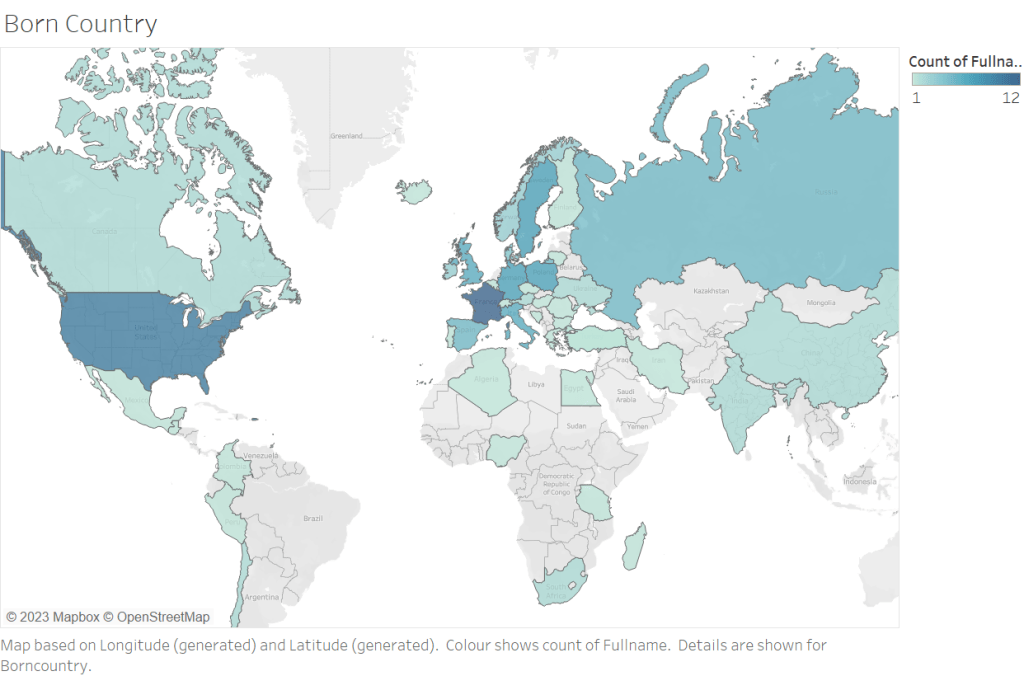
In examining their countries of origin, I discovered that most European nations boast a Nobel laureate. Also France and the USA leading in terms of the number of winners.
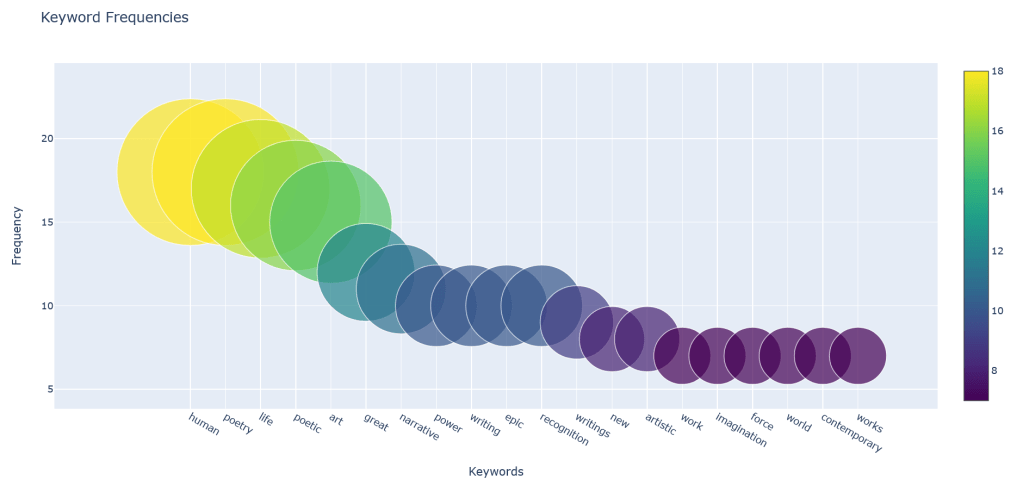
I also visualised a keyword analysis of the motivations for each Nobel Prize in Literature. Poetry emerged as a dominant theme. This discovery sparked my interest in exploring poetry further, an interest initially kindled by reading Bolaño, himself a passionate poetry enthusiast
This exploration into the world of literature was an interesting journey. Data on this topic is scarce, but for literature lovers like me, it’s a fascinating way to go deeper.
 acovilla
Leave a comment